


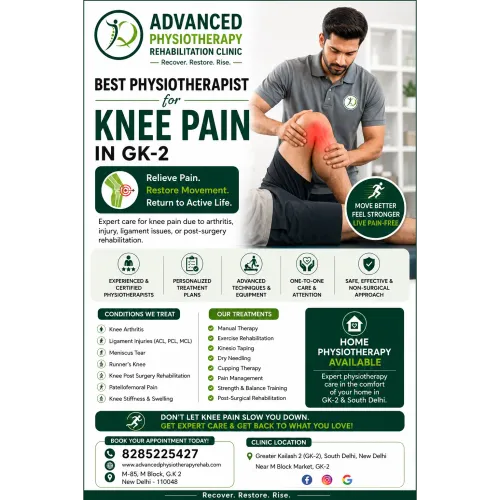
Knee Pain Physiotherapy in Greater Kailash 2, Delhi
2026-09-23T12:21:22  read more
 read more


Sciatica pain is one of the most common conditions affecting the lower back and legs. It usually occurs when the sciatic nerve becomes irritated or compressed due to conditions like slipped disc, spinal stiffness, muscle tightness, or prolonged sitting. People suffering from sciatica often experience lower back pain, burning sensation, numbness, tingling, or pain radiating down the leg. Fortunately, regular physiotherapy and guided home exercises for sciatica pain can help reduce discomfort, improve mobility, and support long-term recovery naturally. Performing safe and effective home exercises helps reduce pressure on the sciatic nerve while improving flexibility and muscle strength. These exercises are commonly recommended by physiotherapists to manage pain and prevent future flare-ups. Consistency is important because gentle movement improves blood circulation, decreases stiffness, and promotes healing. One of the most effective exercises for sciatica pain relief is the knee-to-chest stretch. Lie comfortably on your back and slowly pull one knee toward your chest while keeping the other leg relaxed. Hold the position for 15 to 20 seconds and repeat on both sides. This stretch helps relax the lower back muscles and reduces nerve compression. The pelvic tilt exercise is another excellent movement for lower back support. Lie on your back with knees bent and feet flat on the floor. Tighten your abdominal muscles gently and press your lower back toward the floor. Hold for a few seconds and relax slowly. This exercise strengthens core muscles and improves spinal stability. Cat-camel stretching is widely recommended for improving spinal flexibility. Begin on your hands and knees, then slowly arch your back upward before lowering it gently in the opposite direction. Controlled spinal movement helps reduce stiffness and improves mobility in patients with sciatica pain. Hamstring stretching also plays an important role in sciatica recovery because tight hamstrings can increase stress on the lower back. Sit on the floor with one leg extended and carefully lean forward without forcing the movement. Gentle stretching improves flexibility and reduces pulling pressure on the spine. Another beneficial exercise is the piriformis stretch. Tightness in the piriformis muscle can irritate the sciatic nerve and increase leg pain. Lying on your back, cross one ankle over the opposite knee and slowly pull the supporting leg toward your chest. This stretch helps relieve muscle tightness and improves hip mobility. Walking is also considered a simple but highly effective activity for people suffering from mild to moderate sciatica. Short walks improve circulation, reduce stiffness, and maintain muscle activity without placing excessive pressure on the spine. However, patients should avoid sudden twisting movements, heavy lifting, or prolonged sitting during recovery. Home exercises for sciatica pain work best when combined with professional physiotherapy treatment. Physiotherapists assess posture, spinal alignment, muscle weakness, and nerve mobility to create personalized rehabilitation programs. Advanced physiotherapy techniques such as manual therapy, dry needling, electrotherapy, and posture correction may further improve recovery outcomes. If your sciatica pain continues for several weeks or becomes severe, professional medical evaluation is important. Early treatment can prevent worsening symptoms and help patients return to normal activities safely. With proper exercises, regular movement, and expert physiotherapy guidance, most people experience significant improvement in pain, flexibility, and overall quality of life.
 read more
  read more
 We hate spam too.


